How to layer up in winter – the layering principle explained
Layering is the easiest way to stay warm and dry in winter. Here we go through the three layers, which materials suit each one and how to dress for everyday life.

It might seem logical to put on your thickest jumper when it's cold outside. But it's rarely the smartest move. With several thinner layers you stay warmer, avoid getting sweaty and can easily adapt as you go from the cold outdoors to the warmth of the bus or office. It's called the layering principle, and it works just as well in the city as in the mountains.
Why layers work
Between each layer, a thin pocket of still air forms that insulates. More layers mean more air pockets. Each layer also has its own job: keeping you dry, holding in the warmth and protecting you from the weather. And if you get too warm, you simply take a layer off.
The three layers
1. The base layer – next to the skin
The base layer's job is to move moisture away from your skin. Even a gentle walk makes you release moisture, and moisture close to the body quickly feels cold.
- Good materials: merino wool or moisture-wicking synthetics.
- Less good: cotton, which absorbs moisture and dries slowly.
- Fit: close to the body, but not so tight that it digs in.
2. The mid layer – the insulation
The mid layer holds in the warmth. This is where you adjust the most depending on how cold it is.
- Good materials: fleece, wool, chunky knits or a thin down or synthetic vest.
- Tip: two thin mid layers are often more flexible than one thick one.
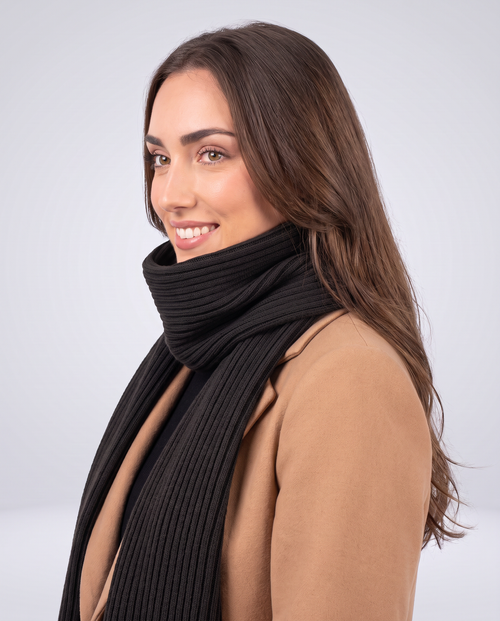
A knitted turtleneck is a typical everyday mid layer. It keeps your neck warm, works well indoors and fits under your coat. Take a look at our oversized knitted turtleneck.
3. The outer layer – the protection
The outer layer protects against wind, rain and snow. Without it, the warmth from your mid layer is quickly blown away.
- Good materials: a wind- and water-resistant jacket or coat.
- Tip: choose a jacket with a little room so the mid layer isn't compressed.
Don't forget your lower body
The layering principle applies to your legs too, even though they're often forgotten. A thin layer under your trousers or skirt can make a bigger difference than an extra jumper.
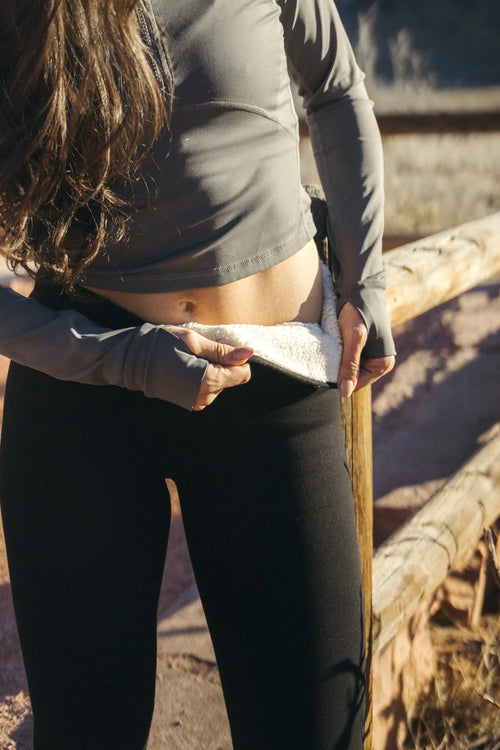
- Under trousers: thin, fleece-lined leggings or tights as a base layer.
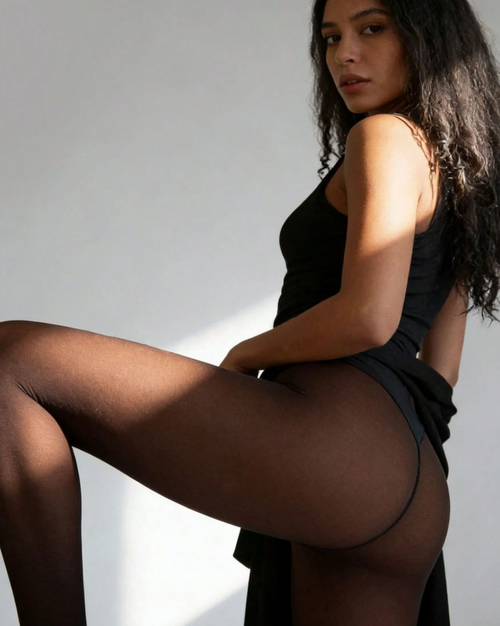
- Under skirts and dresses: fleece-lined tights that look like regular tights but are far warmer.
Our fleece-lined tights and fleece-lined leggings are made for exactly this: warmth without it showing.
Feet, hands and head
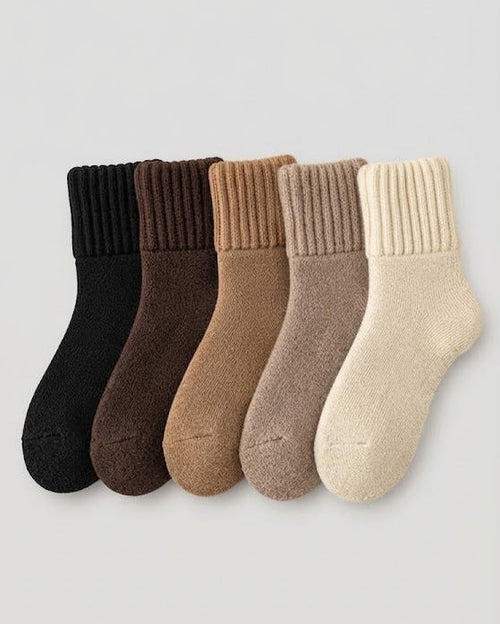
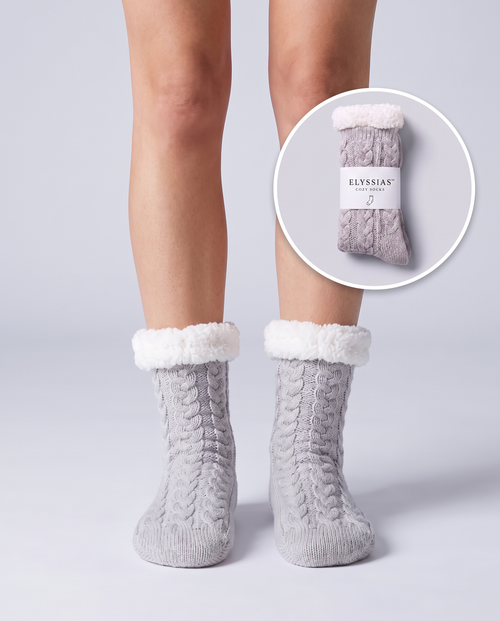
- Feet: one pair of thick, warm socks is usually enough. Two pairs can work if your shoes have room, but tight shoes make feet colder.
- Hands: a pair of thin gloves under thicker mittens is a good layering system for really cold days.
- Head and neck: a beanie and scarf are the easiest layers to take on and off.
Examples: how to dress
Everyday in the city, around zero degrees
- Fleece-lined tights under a skirt or trousers
- A thin long-sleeved top and a knitted jumper
- A coat or jacket, beanie and scarf
- Warm socks and boots
A long walk in sub-zero temperatures
- A base layer in merino wool or a performance fabric, on your legs too
- A fleece jumper or chunky knit
- A windproof jacket and trousers
- Thick socks, beanie, scarf and mittens
Common mistakes
- Too many clothes from the start. Ideally you should feel slightly cool for the first few minutes, otherwise you'll quickly get sweaty.
- Cotton next to the skin when you'll be active outdoors.
- Layers that are too tight and compress the insulation.
- Forgetting your legs. Cold legs make your whole body feel colder.
Frequently asked questions
How many layers should you wear in winter?
Three layers is a good starting point: base layer, mid layer and outer layer. On milder days two may be enough, and when it's very cold you can add an extra mid layer.
Is cotton bad as a base layer?
For sitting still indoors, cotton works fine. When you're moving outdoors in the cold it's a poorer choice, because it holds on to moisture.
Can you wear tights under trousers?
Yes, it's a common and effective way to keep your legs warm. Choose thin, fleece-lined tights or leggings that don't feel bulky under your trousers.