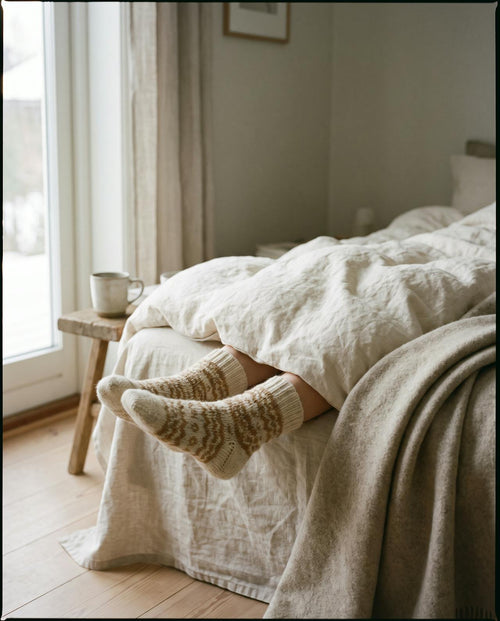
What is the best material to sleep in?
Merino, cotton, fleece, polyester or silk? Here's how the materials differ in warmth, moisture and comfort through the night – and how to choose the right one for you.

Do you sleep hot and wake up sweaty, or lie awake with cold feet half the night? The material of your pyjamas, socks and bedding matters more than many people think. Body temperature naturally drops as we fall asleep, and the textiles closest to your skin decide how well that change is handled. Here we go through the most common materials and what each one does best.
Two things that matter: temperature and moisture
When it comes to sleepwear materials, it really boils down to two properties:
- Temperature regulation – how well the material insulates when it's cold and releases heat when it gets warm.
- Moisture management – what happens to sweat and moisture. Some fibres absorb moisture, others wick it away, and some mostly just turn damp and cold.
We release moisture all night long, even if we don't notice it. A material that keeps moisture close to the skin can feel clammy when it's warm and cold once it cools down. That's why "warmest" isn't always best.
Merino wool – the all-rounder
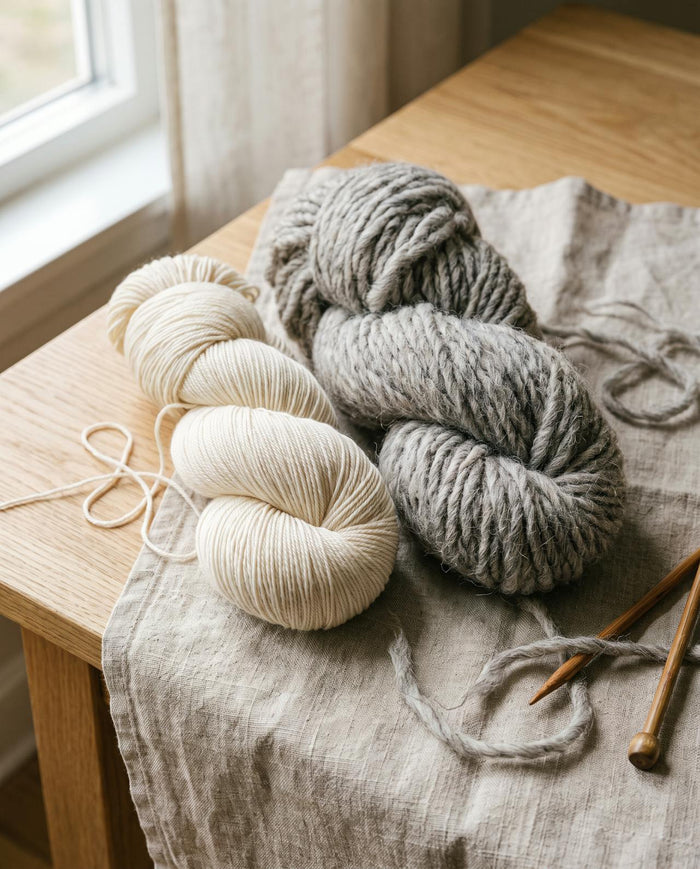
Merino wool is a fine, soft wool fibre known for how well it adapts. The fibre can absorb quite a lot of moisture vapour before it feels wet, and it keeps much of its insulating ability even when slightly damp.
Pros
- Warm when it's cold, but rarely feels stuffy.
- Handles moisture well – good if you tend to sweat at night.
- Naturally resists odour, so it doesn't need washing as often.
Keep in mind
Merino wool needs a little more care in the wash and is often more expensive. Fine merino fibres itch far less than regular wool, but if you're very sensitive you may still prefer a different material next to your skin.
Cotton – the classic
Cotton is soft, breathable and easy to care for. That's why it's still the most common material for pyjamas and sheets.
Pros
- Comfortable against the skin and suits most people.
- Can be washed at higher temperatures.
- A good choice if you sleep at a comfortable temperature in a normally heated bedroom.
Keep in mind
Cotton absorbs moisture and dries slowly. If you sweat a lot, cotton pyjamas can turn damp and feel cold during the night.
Fleece – for those who feel the cold
Fleece is usually made from polyester that has been brushed into a soft, airy surface. The air trapped between the fibres insulates, which makes fleece very warm for its weight.
Pros
- Very warm and soft – perfect in cold bedrooms.
- Dries quickly and is easy to care for.
- Especially good for cold feet, for example as fleece-lined socks.
Keep in mind
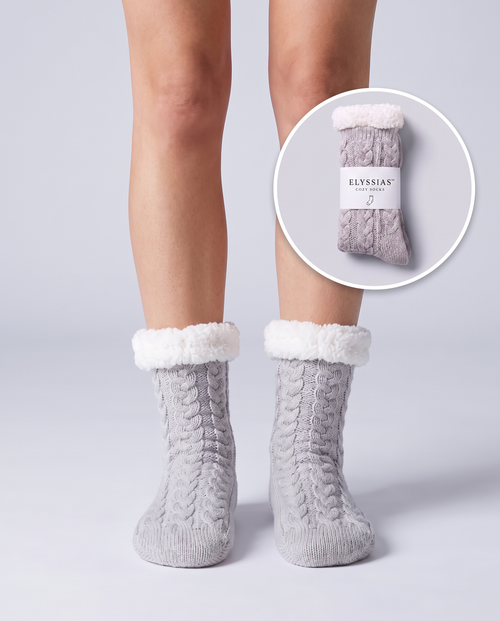
Fleece breathes less well than natural fibres. If you sleep hot, full fleece pyjamas may be too much. A smart middle ground is to warm just your feet, which are often what gets coldest. Our CozySocks with fluffy sherpa lining are made for exactly that – cosy evenings and cold floors.
Polyester and other synthetic fibres
Regular polyester, without a brushed fleece surface, is found in a lot of sleepwear and sportswear. The fibre itself absorbs very little moisture, so it dries quickly.
Pros
- Durable, holds its shape and doesn't crease.
- Quick-drying and easy to wash.
Keep in mind
Dense polyester without a performance knit can feel hot and sticky, since the fibre doesn't absorb the moisture. Quality varies a lot, so feel the fabric and check how airy it is.
Silk – cool and smooth
Silk is a natural fibre with a very smooth surface. It feels cool against the skin and is lightweight, which many people love on warm summer nights.
Pros
- Light and comfortable, with a luxurious feel.
- The smooth surface creates little friction against skin and hair.
Keep in mind
Silk is delicate, needs gentle washing and doesn't provide much warmth. It suits you best if you sleep hot, or as a complement in a warm bedroom.
How to choose the right material for you
- You get cold easily: choose merino wool or fleece – and don't forget your feet.
- You sweat at night: merino wool or thin, airy cotton. Avoid dense synthetics.
- You sleep at a comfortable temperature: cotton is a safe and simple choice.
- Summer nights: silk or thin cotton.
- Cold bedroom but a warm body: lighter pyjamas and warm socks are usually a good compromise.
More tips for a better night
- Go for several thin layers rather than one thick one, so you can easily take something off during the night.
- Change into clean, dry socks before bed, even if you've worn socks all evening.
- Think about your bedding. The duvet and sheets affect temperature just as much as your pyjamas.
- Avoid sleeping in socks that are tight around the ankle. Choose a soft cuff.
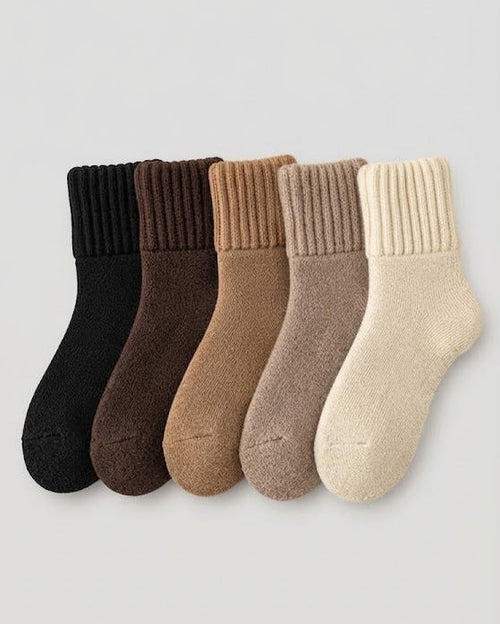
Looking for something warm for your feet this winter? You'll find our full range under socks.
Frequently asked questions
Is it good to sleep in socks?
It's entirely individual. Many people who get cold feet fall asleep more easily with warm feet. Choose soft, clean socks that aren't tight around the ankle.
Which material is best if you sweat at night?
Merino wool usually works well, since it handles moisture well and keeps you warm. Thin, airy cotton is another option. Dense synthetics can feel sticky.
Is fleece too warm to sleep in?
It depends on how warm you sleep and how cold your bedroom is. For many people, fleece on the feet is enough rather than all over the body.
Does merino wool itch?
Merino wool has finer fibres than regular wool, so it feels softer and less prickly. Very sensitive people may still notice it.