The best materials for staying warm – a guide for winter
Wool, fleece, down or synthetics? We explain what actually keeps you warm, why cotton is a poorer choice in the cold, and how to combine materials for winter.

When the temperature drops below zero, most of us start hunting for warmer clothes. But what actually makes a garment warm? The answer has less to do with how thick something is and more to do with how the material handles air and moisture. In this guide we go through the most common winter materials and how to get the most warmth out of them.
How warmth works in clothing
Clothes don't create heat on their own. Your body produces the heat, and your clothes' job is to hold on to it. They do this mainly by trapping still air between the fibres. The more air that can be held in place, the better the insulation.
The other key factor is moisture. Water conducts heat away far faster than air, so a damp garment feels cold. That's why staying dry is just as important as wearing thick clothes.
Wool and merino wool
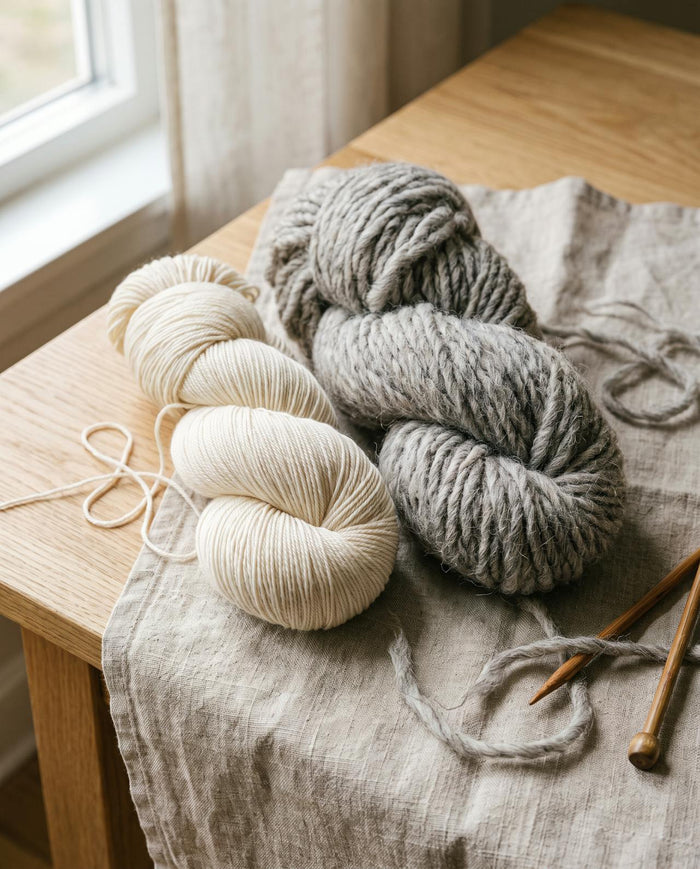
Wool is a winter classic for good reason. The wool fibre is crimped and creates lots of tiny air pockets. It can also absorb moisture vapour and still insulate reasonably well when it isn't completely dry.
- Great for: base layers, socks, beanies, gloves and scarves.
- Merino wool has finer fibres than regular wool, which makes it softer against the skin. That's why it works especially well close to the body and around the head and neck.
If you want to stay warm where the body loses a lot of heat – around the head, neck and hands – a matching set is an easy way to cover everything at once. Take a look at our accessories, where you'll find a beanie and a set with beanie, scarf and gloves.
Fleece and sherpa
Fleece is a synthetic material, usually polyester, with a brushed, airy surface. Sherpa is a variant with longer, curly fibres reminiscent of sheepskin. Both are very warm for their weight.
- Pros: warm, soft, quick-drying and easy to care for.
- Cons: less breathable than wool and lets wind through unless it has a dense outer layer.
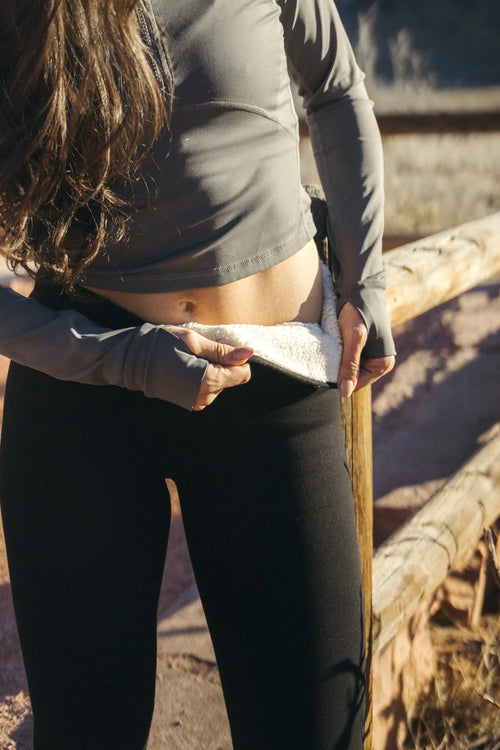
Fleece works especially well as a lining, where it sits close to the skin and is protected by a smoother fabric on the outside. That's the idea behind fleece-lined tights and leggings: a smooth, discreet outside with a soft, warming lining inside. Our fleece-lined tights look like sheer tights but have a thick fleece lining inside.
Down and synthetic insulation
Down is one of the most effective insulating materials there is for its weight. It's mainly used in jackets and duvets. The downside is that down loses much of its insulation when it gets wet. Synthetic insulation is slightly less warm per gram but copes better with moisture.
Cotton – comfy, but not for the cold
Cotton is comfortable to wear indoors, but it's a poorer choice for cold, active days. Cotton absorbs moisture, dries slowly and loses much of its insulation when damp. Sweaty cotton socks in winter boots are a classic recipe for cold feet.
Combine materials the right way
The warmest option is rarely a single material, but a well-thought-out combination:
- Next to the skin: merino wool or a moisture-wicking synthetic.
- Mid layer: fleece, thicker wool or knitwear that traps air.
- Outer layer: a wind- and water-resistant layer that protects the insulation.
Don't forget your legs, feet and hands
Many people dress warmly on top but forget the rest. When it's cold, the body prioritises keeping the core warm, so hands and feet are often the first to get cold.
- Legs: fleece-lined tights or leggings under a skirt, dress or trousers make a big difference.
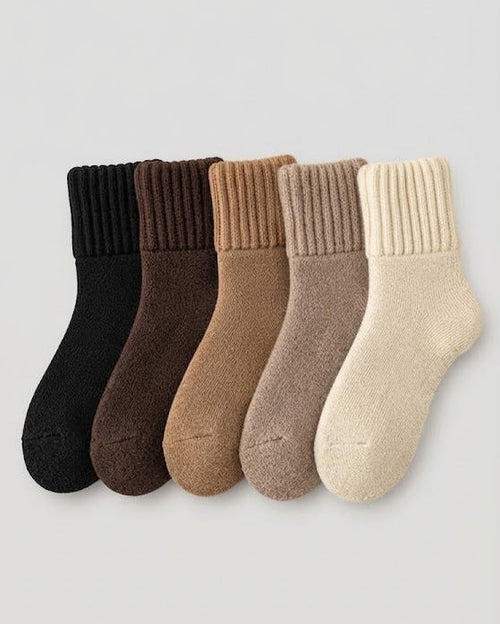
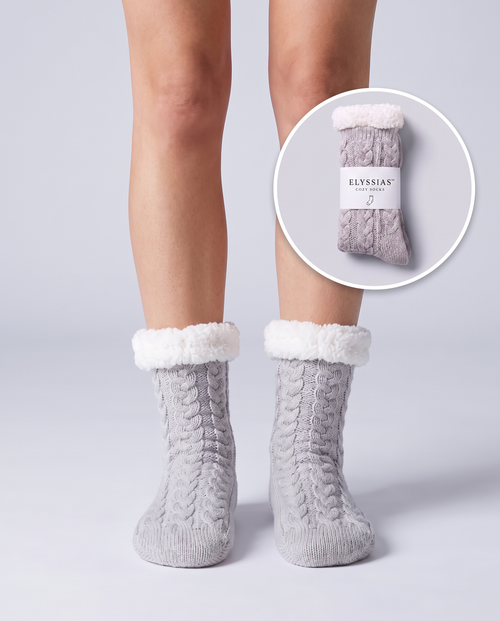
- Feet: thick socks with fleece or wool, and shoes that aren't too tight. Tight shoes compress the insulation.
- Hands: mittens generally keep you warmer than gloves, as the fingers warm each other.
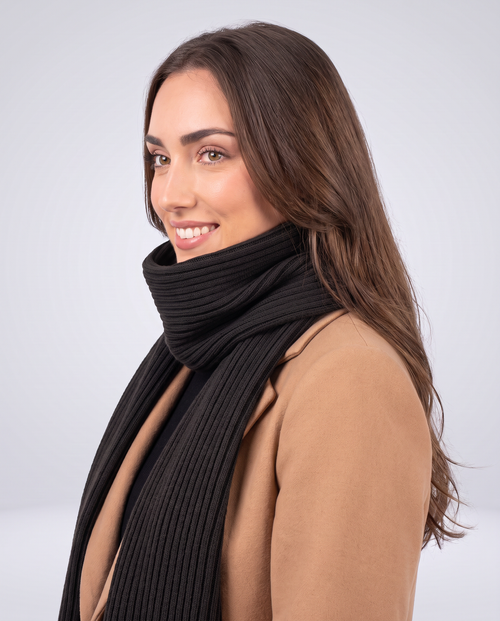
- Head and neck: a beanie that covers your ears and a scarf that keeps out the draught.
Summary
- Still air keeps you warm – moisture and wind make you cold.
- Wool and merino wool are excellent next to the body and in accessories.
- Fleece is warm, light and easy to care for, especially as a lining.
- Avoid cotton next to your skin when you'll be out in the cold for a long time.
Frequently asked questions
What is the warmest material?
There's no single answer, as it depends on whether you're still or active and whether it's dry or wet. Down insulates very well when dry, while wool and fleece cope better with moisture.
Is fleece warmer than wool?
Fleece can feel warmer per gram and dries faster. Wool breathes better, resists odour and insulates even when slightly damp. Many people combine both.
Why are my feet cold even though I wear thick socks?
Common causes are moisture, shoes that are too tight and compress the sock, or the rest of your body being too cold. Try dry socks, slightly roomier shoes and an extra layer on your legs.